Key Takeaways
- Cooling system failures, including coolant leaks and low fluid levels, account for the largest share of overheating incidents in modern vehicles
- A stuck-closed thermostat can push engine temperatures past safe limits within minutes of a cold start
- Engine oil quietly handles the majority of waste heat removal, making regular oil changes a frontline defense against thermal damage
- Missing or damaged fan shrouds dramatically weaken airflow across the radiator, cutting cooling efficiency roughly in half
- A monthly inspection routine covering fluids, hoses, belts, and the radiator cap can catch most heat-related failures before they strand you
- Driving habits, towing loads, and ambient temperature all influence how hard a cooling system has to work
- Early warning signs like fluctuating temperature gauges or sweet-smelling steam should never be ignored
Why Engines Run Hot in the First Place
Internal combustion engines are, at their core, controlled explosions happening thousands of times per minute. Each cylinder fires in a rapid sequence of intake, compression, ignition, and exhaust, with temperatures inside the combustion chamber spiking well above 2,000 degrees Fahrenheit at the moment of ignition. Only about a third of the energy released by burning fuel actually moves the car forward. Another third exits through the tailpipe as hot exhaust gas, and the remaining third has to be absorbed and carried away by the cooling system. If that heat has nowhere to go, metal components begin to warp, gaskets fail, and aluminum cylinder heads can crack within minutes. In severe cases, pistons can seize against cylinder walls, turning a repairable overheat into a complete engine replacement.
The cooling system is engineered to hold the engine within a narrow operating window, usually between 195 and 220 degrees Fahrenheit. That window matters because combustion efficiency, emissions, and lubrication all depend on the engine running neither too cold nor too hot. Run too cold, and fuel fails to vaporize completely, washing oil off cylinder walls and increasing wear. Run too hot, and motor oil thins out, loses its protective film, and begins to oxidize, leaving behind sludge that clogs passages and accelerates further heat buildup. Modern engines rely on tight tolerances and precisely engineered thermal expansion rates, so when something in that delicately balanced system fails, consequences escalate fast — sometimes in the span of a single highway exit.
Understanding the heat sources is the first step toward prevention and smart vehicle maintenance. Friction between moving parts like bearings, pistons, and valvetrain components generates constant thermal load. Combustion gases press against cylinder walls at tremendous pressure and temperature, transferring heat through the metal into the surrounding coolant jackets. Exhaust routing through the head adds another concentrated hot spot, particularly near the exhaust valves and manifold flanges. Turbocharged engines add yet another layer, with compressed intake air arriving significantly warmer than ambient and the turbo itself glowing red under hard use. A healthy cooling loop — radiator, water pump, thermostat, hoses, fans, and coolant — pulls that thermal load away continuously, but it only works when every component is doing its job. Knowing what causes engine overheating starts with recognizing that heat is not an occasional byproduct but a constant, aggressive force the cooling system has to fight every second the engine is running.
Breaking Down What Causes Engine Overheating
Most overheating events trace back to a short list of culprits, and the cooling system itself tops the list. According to the Society of Automotive Engineers, more than three in ten overheating cases stem from problems with the coolant circuit, typically low fluid, slow leaks, or a failing water pump. That single statistic reframes the problem — if you want to prevent breakdowns, start with coolant.
So what causes engine overheating beyond the obvious leak? The list is longer than most drivers realize. A clogged radiator restricts flow. A collapsed lower hose starves the pump of coolant under suction. A failed radiator cap drops system pressure and lowers the coolant’s boiling point. Even a slipping serpentine belt can slow the water pump enough to let temperatures climb on a hot afternoon.
Common root causes include:
- Low coolant from leaks, evaporation, or neglected top-offs
- A failed or stuck thermostat trapping heat inside the engine
- A worn water pump impeller unable to circulate fluid
- A clogged or corroded radiator core blocking heat exchange
- Electric cooling fans that no longer engage at the right temperature
- A blown head gasket allowing combustion gases into the coolant
The Role of the Thermostat
The thermostat is a small, inexpensive valve, but it controls everything. When the engine is cold, it stays closed to speed up warm-up. Once operating temperature is reached, it opens to let coolant flow through the radiator. When it fails in the closed position, temperatures can spike dangerously fast right after you start the car, sometimes within a few miles of leaving the driveway.
Thermostats generally last five to ten years, but there is no reliable warning before they fail. That is why many technicians recommend replacing the thermostat whenever major coolant service is performed, even if it still appears to work.
The Overlooked Role of Engine Oil
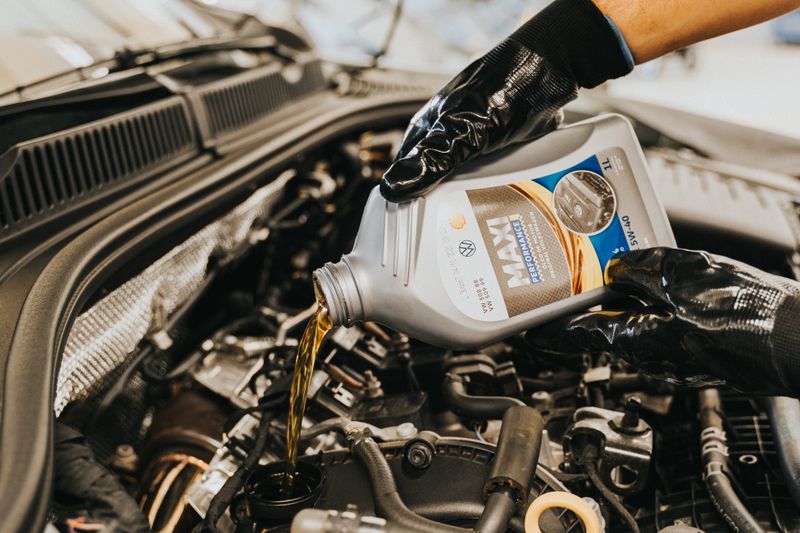
Coolant gets most of the attention, but engine oil is doing far more thermal work than drivers realize. Engine oil carries away roughly 75 to 80 percent of the waste heat that the cooling system itself does not handle directly. That means the condition of your oil has a direct effect on how hot your engine runs.
Old, oxidized oil loses viscosity and its ability to form a protective film between moving parts. Friction increases. Heat climbs. In turbocharged engines, where oil also cools the turbo bearing housing, degraded oil can cause coking, bearing failure, and runaway temperatures that no coolant system can offset.
This is why consistent vehicle maintenance that includes oil and filter changes at manufacturer intervals matters so much to thermal health. Cheap insurance against an expensive problem. Developing habits that prevent costly repairs starts with respecting the oil change interval printed in your owner’s manual rather than stretching it.
How Airflow and Fans Keep Temperatures in Check
A radiator cannot do its job without steady airflow pulling heat out of the coolant. At highway speeds, ram air through the grille usually does the work. In stop-and-go traffic, electric or belt-driven fans take over, and the shroud around those fans is more important than it looks.
Experts point out that removing the fan shroud can cut cooling effectiveness by as much as 50 percent depending on how far the fan sits from the radiator. The shroud directs airflow across the entire radiator surface instead of allowing it to swirl around the fan blades. If yours is cracked, missing fasteners, or has been removed during a previous repair, cooling capacity suffers significantly.
Fan problems to watch for include:
- Electric fans that fail to spin up when the AC is turned on
- A fan clutch that no longer engages when the engine is hot
- Bent, cracked, or chipped fan blades reducing airflow volume
- Debris such as plastic bags or leaves blocking the radiator face
- Corroded wiring connectors to the fan relay or temperature sensor
Why Highway Driving Masks Fan Problems
Drivers who commute mostly on highways often do not realize their cooling fans have failed until the first traffic jam of summer. At 65 miles per hour, ram air hides the problem. Once speeds drop below about 25, the fan becomes the sole source of airflow. Test your fans periodically by letting the engine idle with the AC on and listening for them to cycle.
Monthly Checks That Catch Problems Early
The good news is that most thermal failures telegraph themselves well in advance. A simple monthly walkaround takes less than fifteen minutes and catches the overwhelming majority of issues before they strand you. The key is consistency, not complexity.
Start with the coolant reservoir when the engine is cold. The level should sit between the minimum and maximum marks, and the fluid should look clean, not rusty or oily. Open the hood and squeeze the upper radiator hose — it should feel firm but flexible, not spongy, cracked, or rock hard. Scan the ground under where you park for any puddles or stains that were not there last week.
A reliable monthly checklist:
- Verify coolant level and color in both the reservoir and, when cold, the radiator
- Inspect all visible hoses for bulging, cracking, or soft spots
- Check belt tension and look for glazing or missing chunks
- Confirm the radiator cap seals properly, and the rubber gasket is intact
- Clear bugs, leaves, and road debris from the front of the radiator and condenser
- Watch the temperature gauge during the first few minutes of driving
Pay attention to smell and sight as well. Sweet-smelling steam points to a coolant leak hitting a hot surface. White exhaust that does not clear after warm-up suggests coolant entering the combustion chamber. A temperature needle that climbs higher than usual in traffic but drops on the highway is almost always an airflow or fan issue.
Pressure Testing Between Monthly Checks
Once or twice a year, it is worth having a shop pressure-test the cooling system. The test uses a hand pump to pressurize the system to its rated level and watches for drops that reveal leaks too small to see. Many shops perform this test for free or as part of a seasonal inspection, and it catches pinhole leaks in the radiator, heater core, and water pump long before they become roadside emergencies.
Driving Conditions That Push Cooling Systems to the Limit
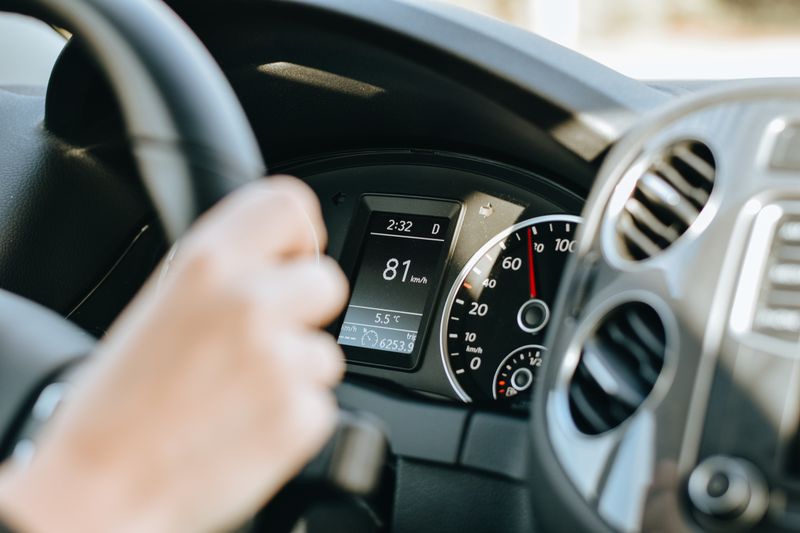
Not every overheating event is the fault of a broken part. Sometimes the demand simply exceeds what the system was designed to handle. Towing a trailer up a long grade on a 95-degree day puts enormous thermal load on an engine, and a cooling system that performs flawlessly in daily driving may still struggle under those conditions.
Factors that increase cooling demand include:
- Towing or hauling loads near the vehicle’s maximum rating
- Extended idling in hot weather with the AC on full blast
- Climbing sustained grades at low speeds in high gears
- Off-road driving where mud or dust coats the radiator fins
- Aggressive acceleration patterns that keep combustion temperatures elevated
Drivers who regularly operate in these conditions should consider upgrading to a heavier-duty radiator, adding an auxiliary transmission cooler, or at minimum shortening their inspection intervals. The factory cooling system has margin, but that margin shrinks as the vehicle ages.
Responding When the Temperature Gauge Climbs
Even with diligent inspections, something eventually goes wrong. How you respond in the first thirty seconds determines whether you face a hose replacement or a rebuilt engine. The instant the gauge enters the red zone or a warning light illuminates, turn off the air conditioning and switch the heater to full hot with the fan on high. This pulls heat out of the engine and buys you time.
Pull over as soon as it is safe. Do not open the radiator cap on a hot engine — the pressurized coolant can erupt and cause severe burns. Let the engine cool for at least thirty minutes before investigating. If coolant is visibly leaking or steam is pouring from under the hood, call for a tow rather than attempting to drive further. A few miles on an overheated engine can warp the head and turn a minor repair into a four-figure bill.
Conclusion
Heat is the enemy of every moving part under your hood, and the systems designed to manage it depend on components that quietly wear out over time. The thermostat, water pump, radiator, hoses, fans, and even the oil itself all play roles that overlap and reinforce one another. When one weakens, the others compensate until they cannot, and that is when a routine commute turns into a flatbed ride home.
The fifteen minutes you spend each month looking under the hood are the single best defense against that scenario. Catching a seeping hose, a crusty reservoir cap, or a fan that no longer cycles costs almost nothing compared to the price of a warped cylinder head. Pair those monthly walkarounds with scheduled fluid service and the occasional pressure test, and your cooling system will outlast most of the car around it.
Treat warning signs as information, not inconvenience. A gauge that behaves differently today than it did last week is telling you something, and the earlier you listen, the cheaper the fix. Engines are remarkably durable when kept within their design temperature window, and staying inside that window is almost entirely a matter of attention.
About the Author